TEL:+212674372188
moroccotrailways@gmail.com
A complete question-and-answer guide for travellers planning a trip to Morocco.
Morocco is one of the easiest introductions to North Africa. It sits just a few hours from most European capitals, has a well-developed tourism infrastructure, and packs an extraordinary range of experiences — imperial cities, Sahara dunes, Atlas peaks and Atlantic beaches — into a relatively compact country. First-time visitors are consistently surprised by how much they can see in a single week.
Spring (March to May) and autumn (September to November) offer the most comfortable conditions nationwide, with warm days, cool evenings and pleasant desert temperatures. Winter is excellent for the Sahara and the south but cold in the mountains, while summer suits the Atlantic coast far better than inland cities such as Marrakech and Fes.
Seven to ten days is the sweet spot for a first visit, allowing time for two imperial cities plus the Sahara. Five days works if you focus on one region, while two weeks lets you add the coast, the Rif Mountains or a slower pace throughout.
Morocco is generally regarded as one of the safer destinations in the region and tourism is a major, well-protected part of the economy. Violent crime against visitors is rare; the more common issues are opportunistic pickpocketing in crowded souks and persistent street vendors. Normal city precautions — secure valuables, licensed taxis, awareness in busy squares — are usually all that is required.
Citizens of the United States, Canada, the United Kingdom, Australia, New Zealand, the EU and many other countries may enter Morocco without a visa for short tourist stays. Requirements do change, so always confirm the current rules with the Moroccan consulate or embassy for your nationality before booking.
Casablanca Mohammed V (CMN) has the widest range of long-haul connections, while Marrakech Menara (RAK) is the most convenient arrival point for the majority of tours. Fes, Tangier and Agadir also receive international flights and can be useful depending on your route.
Marrakech is usually the preferred starting point because it offers direct access to the Atlas Mountains and Sahara Desert. Casablanca is best for international flight connections and longer itineraries that explore multiple regions.
Very much so. Moroccan culture is warmly welcoming to children, and the variety of experiences — camel rides, desert camps, mountain walks, beaches, markets — keeps younger travellers engaged. Private tours make family travel considerably easier by allowing flexible timings and rest breaks.
Morocco is a popular honeymoon choice thanks to its luxury riads, private desert camps, spa hammams and dramatic scenery. Sunset over the dunes, candlelit dinners in a courtyard riad and a few days on the Atlantic coast make an easy and memorable combination.
Yes. Most reputable operators build itineraries around your dates, interests, pace and budget. You can adjust the number of nights in each place, upgrade accommodation, add activities or slow the driving days down considerably.
Three to six months ahead is ideal, particularly for travel in spring, autumn or around major holidays, when the best riads and desert camps sell out early. Shorter notice is often possible, though your choice of accommodation will be more limited.
Morocco offers strong value across every budget level. Meals, local transport and markets are inexpensive by European or North American standards, while accommodation ranges from simple guesthouses to world-class luxury. Your total cost is driven mainly by hotel category and whether you travel privately or in a group.
Arabic and Amazigh (Berber) are the official languages, and French is widely used in business, education and tourism. Spanish is common in the north, and English is increasingly spoken in hotels, restaurants and by guides.
Independent travel is entirely feasible, especially between the major cities connected by train. The difficulty comes with the desert, the Atlas Mountains and the kasbah routes, where public transport is limited and a driver or organised tour saves considerable time and effort.
Private tours offer flexibility, personal attention and the freedom to set your own pace, which most travellers value on a route with long driving days. Group tours are more economical and suit sociable travellers who are comfortable with a fixed schedule.
Solo travel in Morocco is common and rewarding. Solo visitors should expect more attention from vendors and guides in busy medinas, and many prefer joining small-group desert tours or hiring a private driver for the longer overland sections.
Yes, and families do so year-round. Choose accommodation with a pool for downtime, avoid over-packing the itinerary, and consider a private vehicle so you can stop when needed. Children are welcomed almost everywhere in Morocco.
Morocco can be visited in any month, but the ideal region shifts with the season. Spring and autumn suit the whole country; winter favours the desert and the south; summer is best spent on the Atlantic coast or in the mountains.
City sightseeing involves a fair amount of walking on uneven medina streets, typically two to four hours at a time. Desert and mountain days can be as gentle or as active as you choose, and private tours can be adapted for travellers who prefer shorter distances.
Yes. Ferries link southern Spain with Tangier in under two hours, and short flights connect Marrakech and Casablanca with Madrid, Lisbon, Seville and Barcelona. Combining Andalusia with northern Morocco is a particularly natural pairing.
Comprehensive travel insurance is strongly recommended. Look for a policy covering medical treatment, trip cancellation, lost luggage and — if you plan to trek, ride camels or use quad bikes — adventure activities.
Wi-Fi is standard in hotels, riads and most cafés, and mobile data coverage is good across cities and main roads. Connectivity thins out in remote mountain and desert areas, where speeds are slower and some camps have no signal at all.
Most unlocked phones work on Moroccan networks. International roaming is available but often expensive, so many travellers buy a local SIM or eSIM on arrival for far cheaper data.
Book the essentials in advance — desert camps, cooking classes, hot-air balloon flights and popular restaurants — particularly in high season. Smaller excursions can usually be arranged locally with a day or two of notice.
A guided tour removes the logistical burden of long drives, navigation, accommodation bookings and language barriers, and adds local context you would not find alone. It is especially worthwhile for the desert and kasbah routes, where distances are long and public transport is minimal.
Few countries compress so much variety into such a short journey. In a single week you can move from a medieval walled medina to snow-capped mountains, then to Saharan dunes and the Atlantic coast — while experiencing a living culture shaped by Amazigh, Arab, Andalusian and African traditions.
A classic first-visit route runs Marrakech → Aït Ben Haddou → Dades Valley → Merzouga (Sahara) → Fes, ideally over seven to ten days. It covers imperial cities, mountain passes, kasbahs and the desert in one continuous loop.
Costs vary widely by standard of accommodation and whether the tour is private or shared. Budget group tours start at modest daily rates, mid-range private tours sit comfortably in the middle, and luxury itineraries with five-star riads and premium desert camps cost considerably more. Request a full breakdown of what is included before comparing prices.
Yes. Tours operate in every month, with itineraries adjusted for seasonal conditions — earlier starts in summer heat, alternative mountain routes after heavy snow.
A week comfortably covers two to three cities plus the desert. Attempting more than four in that time usually means long drives and little time to enjoy each place.
Marrakech is livelier, more visual and better positioned for excursions; Fes is older, more atmospheric and richer in traditional craftsmanship. If you have to choose, Marrakech suits first-time visitors while Fes rewards those interested in history and artisan culture.
Three days from Marrakech or Fes is the realistic minimum, allowing one night in a desert camp. Two-day trips exist but involve long hours of driving for very little time in the dunes.
Absolutely. Much of Morocco’s appeal lies between the cities — the Tizi n’Tichka pass, the Valley of the Roses, the Dades gorges, the Ziz palm groves. These are landscapes you can only experience by road.
Expect four to eight hours of driving on transfer days, broken up by scenic stops and sightseeing. Longer itineraries spread the distance more evenly and leave more time out of the vehicle.
Yes. English is widely understood in the tourism sector, and guides, hotel staff and drivers routinely work in English. A few words of Arabic or French are appreciated but never essential.
Morocco rewards curious travellers who enjoy sensory variety — markets, food, architecture, landscapes — and are comfortable with a destination that feels genuinely different. It suits couples, families, photographers, foodies and adventurers equally well.
Trains serve the north and centre well, connecting Tangier, Rabat, Casablanca, Meknes, Fes and Marrakech comfortably and affordably. The desert, the Atlas Mountains and the southern kasbah routes are road-only.
Two nights minimum in each major city and no more than one long driving day in a row. This keeps the trip enjoyable rather than exhausting and leaves room for the unplanned discoveries that often become the highlight.
A private driver is the more relaxing choice for most visitors: no navigation, no parking, no unfamiliar road etiquette, and a local who can suggest stops. Self-drive suits confident drivers who want complete independence and don’t mind mountain roads.
Yes. Private tours in particular can be paced gently, with shorter walking routes, comfortable vehicles, and 4×4 transfers to desert camps in place of camel treks. Many operators regularly host travellers in their seventies and eighties.
Comfortably, in around ten days. A typical combination is Marrakech and the High Atlas, then Merzouga for the Sahara, returning via Aït Ben Haddou to Marrakech and finishing in Essaouira on the Atlantic.
Marrakech’s main sights and Chefchaouen’s blue streets get busy in peak season, but crowds thin dramatically once you leave the headline destinations. Early-morning visits and shoulder-season travel make a noticeable difference.
Morocco is one of the most photogenic countries in the world — dune fields at sunrise, cobalt alleyways, spice markets, tanneries, kasbahs and mountain villages. The light in spring and autumn is particularly good.
The best known include Jemaa el-Fnaa and the Bahia Palace in Marrakech, the Fes medina and its tanneries, the Hassan II Mosque in Casablanca, the blue city of Chefchaouen, the UNESCO-listed kasbah of Aït Ben Haddou, the Erg Chebbi dunes at Merzouga, and the Roman ruins of Volubilis.
Easily. Guesthouses, local restaurants, trains and shared tours keep costs low, and many of Morocco’s best experiences — wandering the medinas, watching the sunset from a rooftop, exploring markets — cost nothing at all.
Luxury tours buy comfort and time: restored palace riads, premium desert camps with private bathrooms, expert guides, newer vehicles and seamless logistics. For travellers with limited holiday time, that difference is often what makes the trip.
Arriving a day before your tour starts is wise. It absorbs any flight delays, lets you recover from the journey, and gives you an unhurried first look at your starting city.
Bring a passport valid for at least six months, your travel insurance details, tour and accommodation confirmations, and a driving licence if you plan to rent a car. Keep digital and paper copies stored separately from the originals.
There is no need. The Moroccan dirham is a closed currency and is difficult to obtain abroad, so most travellers withdraw dirhams from an ATM on arrival or exchange a small amount at the airport.
Because it delivers exceptional variety, deep cultural richness and genuine hospitality at accessible prices, only a short flight from Europe. Few destinations offer medieval cities, mountain ranges, Saharan dunes and an Atlantic coastline within a single week-long journey.
Many nationalities — including US, Canadian, UK, Australian, New Zealand and EU citizens — can enter Morocco visa-free for tourism. Because entry rules are subject to change, verify the current requirements for your passport with the Moroccan consulate before you travel.
Visa-free stays are commonly limited to 90 days within a given period for eligible nationalities. Confirm the exact allowance for your passport, as it varies by country.
Extensions are possible but must be applied for in person at a local police station or the immigration office before your permitted stay expires. Approval is discretionary, and the process is considerably easier if you begin well in advance.
Six months of validity beyond your date of entry is the safe standard, and airlines frequently enforce it. Make sure you also have at least one blank page for entry and exit stamps.
Immigration officers and airlines may ask for proof of onward or return travel. Carrying a confirmed onward ticket avoids delays at check-in or on arrival.
No vaccinations are routinely required for travellers arriving from Europe or North America. Health authorities often recommend being up to date on routine immunisations plus hepatitis A and typhoid; consult a travel health clinic several weeks before departure for advice specific to you.
Insurance is not a legal entry requirement, but it is strongly advised. Medical treatment, trip cancellation, lost baggage and adventure-activity cover are all worth having on a trip that involves long overland travel and desert excursions.
The Moroccan dirham (MAD), divided into 100 centimes. It is a closed currency, meaning it cannot legally be taken out of the country in significant amounts and is hard to obtain before you arrive.
Some hotels, tour operators and larger shops accept euros or dollars, but exchange rates are rarely favourable. Day-to-day spending — taxis, cafés, markets — should be done in dirhams.
Cards are accepted in hotels, larger restaurants, supermarkets and established shops in cities. Souks, small cafés, rural areas and most taxis are cash-only, so never rely on cards alone.
Yes. Carry enough dirhams for daily expenses, tips and market purchases, but keep the bulk of your funds secured in your accommodation and only take out what you need for the day.
ATMs are plentiful in cities, towns and airports, and generally accept international cards. They are scarce in the desert and remote mountain villages, so withdraw before heading into those regions.
Visa and Mastercard are the most widely accepted; American Express is much less useful. Cards with low foreign-transaction fees save money, and notifying your bank of your travel dates helps prevent blocked transactions.
Yes, airport exchange counters and ATMs are available in all arrival terminals. Airport rates are typically slightly worse than in-town bureaux, so change only what you need immediately.
ATMs usually give a better rate than exchange counters, though your bank’s withdrawal fee matters. A practical approach is to withdraw larger amounts less frequently and keep a small reserve of euros or dollars as backup.
Budget travellers can manage on very little; mid-range visitors typically allow a moderate daily sum for meals, entry fees, tips and shopping. If your tour includes accommodation, transport and most meals, your daily cash needs drop considerably.
Compared with Western Europe or North America, Morocco is affordable. Food, transport and shopping are inexpensive, while luxury hotels and premium desert camps sit at international price levels.
Some restaurants add a service charge; many do not. Check your bill, and if no charge appears, a small tip for good service is customary.
Tipping is a normal part of Moroccan service culture. Modest amounts for waiters, porters, guides and drivers are appreciated, and more generous tips are reserved for genuinely excellent service.
Yes — bargaining is expected in souks and artisan markets and is treated as a friendly exchange rather than a confrontation. Fixed-price shops, supermarkets and restaurants are the exception.
Tap water is chlorinated in cities, but most visitors stick to bottled or filtered water to avoid stomach upsets. Bottled water is inexpensive and widely available; a filter bottle is a good low-waste alternative.
Personal medication is permitted. Keep it in the original labelled packaging, carry a copy of your prescription, and check in advance if you take controlled substances, as some medicines that are routine elsewhere are restricted.
Morocco uses 220V with European-style round two-pin plugs (types C and E). Travellers from the UK, US, Canada and Australia will need an adapter, and some devices may also require a voltage converter.
A local SIM or eSIM is inexpensive and offers far cheaper data than international roaming. SIMs are sold at airports and phone shops nationwide, and registration takes only a few minutes with your passport.
Coverage is strong in cities, towns and along main roads, and reasonable in most tourist areas. Expect weak or absent signal deep in the dunes, in high mountain areas and on some remote desert tracks.
Contactless mobile payment is accepted at some modern retailers and hotels in major cities, but it is far from universal. Treat it as a convenience, not a substitute for carrying cash.
No. The dirham is difficult to buy abroad and rates are usually poor. Withdraw or exchange on arrival, and change money back before you leave, since dirhams are of little use outside the country.
Yes, Moroccan ATMs accept international Visa and Mastercard withdrawals. Be aware of both your home bank’s fee and any local ATM charge, and always choose to be billed in dirhams rather than your home currency.
Licensed exchange bureaux are common in city centres, tourist districts, airports and larger hotels. Use official offices, compare posted rates, and always count your money before leaving the counter.
Most tour operators accept euros or dollars for tour payments, and many quote in these currencies. Confirm the accepted payment methods and any card surcharge when you book.
Carrying cash is normal and generally safe with sensible precautions. Use a money belt or inside pocket in crowded souks, split your funds between locations, and leave what you don’t need in your hotel safe.
Yes, domestic carriers apply their own checked and cabin baggage limits, which are often lower than on international routes. Check your allowance in advance to avoid excess baggage charges at the airport.
Three hours before an international departure and two hours for a domestic flight is a safe guideline. Casablanca and Marrakech can be busy at peak times, and security queues move slowly.
Drones are heavily restricted in Morocco and are frequently confiscated at customs on arrival. Bringing one requires prior authorisation, and most travellers are advised to leave drones at home.
Personal and professional camera gear is welcome and commonly carried by visitors. Commercial filming and photography for publication may require permits, so check ahead if you are shooting for work.
Most public places are fine, but avoid photographing military installations, police and government buildings. Always ask before photographing people, and note that some mosques, museums and tanneries restrict photography.
Many foreign licences are accepted for short visits, though rental companies and authorities may ask for an International Driving Permit alongside your national licence. Obtaining an IDP before travel is a simple precaution.
Yes, international and local rental agencies operate at all major airports and in city centres. Book in advance during peak season, and inspect and photograph the vehicle thoroughly before driving away.
Highways and main roads are good and well signposted. City traffic is assertive, medina access is restricted, and mountain roads are narrow and winding — all manageable for confident drivers, but a common reason visitors prefer a private driver.
Yes. Long-distance coach companies run comfortable, air-conditioned services on an extensive network at very low cost, reaching many places the railway does not.
The high-speed line between Tangier and Kenitra — continuing on to Rabat and Casablanca — cuts journey times substantially and is comfortable and modern. It is an excellent option for travel along the northern corridor.
Licensed taxis are safe and widely used. Small petit taxis operate within cities and should use the meter; larger grands taxis cover intercity routes, where the fare is agreed in advance.
Report the loss to the local police and obtain a written report, then contact your embassy or consulate for an emergency travel document. Carrying a photocopy and a digital scan of your passport makes the process significantly faster.
Contact your bank immediately to freeze the card and arrange a replacement. Travelling with a second card stored separately, plus a cash reserve, prevents a lost card from disrupting your trip.
Connectivity is good in cities and tourist areas, with Wi-Fi in most hotels, riads and cafés. Speeds drop in rural regions, and some desert camps and mountain lodges have no connection at all.
Yes. Offline maps are invaluable in medinas with unmarked alleyways and in remote areas without signal. Downloading offline city maps and translation packs before departure is a small step that pays off repeatedly.
Bringing a pet requires a valid rabies vaccination and an official veterinary health certificate issued shortly before travel, and airlines have their own conditions. Requirements change, so confirm the current rules with Moroccan authorities and your airline well ahead of time.
Baggage screening on arrival is routine and usually quick. Officers pay particular attention to drones, large quantities of electronics and goods that appear to be for resale.
Personal gifts are fine within duty-free allowances. Larger quantities of new goods may attract duty, so keep gifts modest and be prepared to explain them if asked.
A universal power adapter, comfortable closed-toe walking shoes, sunscreen, sunglasses, a scarf or hat, layered clothing for cool desert nights, a power bank, refillable water bottle, basic medications and photocopies of key documents. Everything else can be bought locally.
Without question. Sunrise over the dunes, a camel trek across golden sand, a night in a desert camp and traditional music under an enormous sky add up to the experience most travellers remember longest. For many visitors, the Sahara is the defining moment of their trip to Morocco.
The two main options are Erg Chebbi near Merzouga and Erg Chigaga near M’Hamid. Erg Chebbi is easier to reach and offers the widest choice of camps and activities; Erg Chigaga is remote, quieter and better suited to travellers who want a genuine expedition feel.
Merzouga sits beside Erg Chebbi, home to some of Morocco’s tallest dunes and the classic Sahara scenery people picture. Zagora is closer to Marrakech and quicker to reach, but its dunes are much smaller. If dramatic desert landscapes matter to you, choose Merzouga.
Three days is the practical minimum from Marrakech or Fes. Four or five days makes the journey far more enjoyable, adding time in mountain villages, palm valleys and historic kasbahs along the way.
Two-day trips reach the nearer desert areas but involve very long driving days and only a brief stop in the dunes. Most travellers find a three-day itinerary far more rewarding.
Standard inclusions are transport, accommodation, breakfast and dinner, a camel trek, one night in a desert camp and sightseeing stops en route. Local guides, sandboarding and village visits are included on some tours and optional on others.
No. Camel trekking is optional almost everywhere. Most camps can also be reached by 4×4, which suits travellers with mobility concerns or anyone who simply prefers not to ride.
Typically 45 to 90 minutes, depending on the camp’s distance from the trailhead. Rides are usually timed for sunset or sunrise, when temperatures are cooler and the light is at its best.
Yes, when led by experienced handlers. The camels are used to carrying visitors, and guides explain how to mount, dismount and sit comfortably. Following your guide’s instructions is all that is required.
Long trousers, comfortable layers, closed-toe shoes, sunglasses and a hat or scarf for sun and sand protection. From late autumn through early spring, bring a warm jacket for the evening.
Pack light in a small overnight bag: a change of clothes, a warm layer, sunscreen, sunglasses, toiletries, a torch, a power bank, a refillable water bottle and your camera. Large suitcases stay with the vehicle.
Yes, and the drop surprises many visitors. Even after a hot day, desert nights can be genuinely cold between November and March, so warm clothing is essential in those months.
Daytime temperatures can exceed 40°C (104°F). Tours still run, with activities scheduled around the early morning and evening. Stay hydrated, wear light fabrics, use strong sun protection and rest during the hottest hours.
Spring (March to May) and autumn (September to November) are the most comfortable. Winter brings pleasant days and cold, clear nights ideal for stargazing, while summer suits travellers who don’t mind extreme heat.
For most travellers, yes. Luxury camps provide spacious private tents, proper beds, en-suite bathrooms with hot water, electricity, excellent food and attentive service — comfort that makes a night in the dunes something you look forward to rather than endure.
Standard camps offer simple tents and shared facilities; luxury camps add private bathrooms, quality bedding, furnished interiors, electricity and personalised service. Both are authentic — the difference is comfort, not location.
Luxury camps generally provide electricity through the evening and overnight via generators or solar systems. Standard camps often have limited supply, so check when booking if power matters to you.
Some luxury camps offer Wi-Fi in shared areas, though speeds are slow. Many travellers treat the night in the dunes as a welcome break from being online.
Most luxury camps include private bathrooms with a toilet, sink and hot shower in each tent. Standard camps typically use shared facilities, so confirm the details before you book.
Luxury camps usually have charging points in the tents or communal areas. Standard camps may not, so arrive with a fully charged power bank.
Expect traditional Moroccan cooking: tagine, couscous, grilled meats, fresh salads, seasonal vegetables, fruit and pastries, served with bread and mint tea. Vegetarian, vegan and other dietary needs can usually be met with advance notice.
Most operators supply bottled water or make it available along the route. Bringing a refillable bottle is a practical way to stay hydrated and reduce plastic waste.
Yes, and families do so regularly. Camel rides, sandboarding and sleeping under the stars are memorable for children. Families with very young children usually prefer a private tour for the added flexibility.
Yes. Private tours allow a gentler pace with more frequent stops, and travellers who would rather skip the camel trek can reach the camp directly by 4×4.
Organised desert tours are considered safe and are run by experienced local drivers and guides who know the terrain and the weather. Staying with your group, following your guide’s advice, drinking plenty of water and dressing for the temperature swing covers the practical risks.
Both are major dune systems but the experience differs. Erg Chebbi, near Merzouga, has higher dunes, easy road access and a wide range of camps. Erg Chigaga is reached by off-road driving from M’Hamid and rewards travellers who want isolation over convenience.
Erg Chebbi. It combines spectacular dunes, comfortable camps, good road access and plenty of activities, making it a reliable choice for couples, families and solo travellers alike.
Yes — it’s one of the most popular activities in the dunes. Many camps keep boards for guests, and beginners usually get the hang of it within a few runs.
Some tours include board hire at no extra cost, while others treat it as an optional add-on. Confirm what’s covered before booking if it’s something you want to try.
Yes. Quad biking is widely available around Merzouga, with guided excursions ranging from short rides near the dunes to longer routes through the surrounding desert.
Yes. Dune buggy excursions are offered by specialist operators in parts of the Sahara, following set routes with experienced guides — an exhilarating way to cover the terrain.
Absolutely. Many itineraries include 4×4 excursions to remote dunes, fossil beds, desert villages and viewpoints that ordinary vehicles simply cannot reach.
Some itineraries include a visit to a nomadic family, offering a rare look at traditional desert life, hospitality and customs. These visits should always be arranged respectfully through your guide.
Yes — Merzouga, Hassilabied, Khamlia, Rissani and M’Hamid are all common stops. Each has its own character, from Gnawa music to weekly markets and traditional mud-brick architecture.
Khamlia is known for its Gnawa musical heritage, brought to Morocco through sub-Saharan migration centuries ago. Visitors can hear live performances and learn how the community has preserved this tradition across generations.
The desert looks empty but supports more life than expected. Depending on the season you may spot desert foxes, lizards, beetles, migratory birds and other species adapted to extreme conditions.
Both exist in the region, but encounters on organised tours are uncommon. Camps are sited carefully and guides know what to watch for. Avoid walking barefoot after dark and shake out shoes before putting them on.
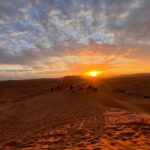
Yes, and it’s worth the early alarm. Climbing a dune before dawn to watch the light move across the sand is one of the quietest and most striking moments of any Morocco trip.
They offer different rewards. Sunset brings warm golden light and long shadows across the dunes; sunrise is cooler, softer and almost completely silent. If you can, experience both.
Exceptionally. With almost no light pollution and clear skies for much of the year, the Sahara offers views of the Milky Way, thousands of visible stars and, in season, meteor showers.
Yes, and the Sahara is a photographer’s destination in its own right — dune ridges, camel caravans, camp lanterns and dramatic skies. The hour after sunrise and before sunset gives the best light.
Spare batteries, extra memory cards, a lens cloth and sealed bags or covers for your gear. Fine sand travels everywhere, so keep equipment protected whenever it isn’t in use.
Large suitcases are driven separately to the camp while you carry only a small overnight bag on the camel trek. Your operator will explain the arrangement before you set off.
Yes. Most travellers leave their main luggage secured in the vehicle during the camel ride and take only what they need for the night.
Very much so. Solo travellers join shared desert tours or book privately, and the campfire evenings make it one of the easiest places in Morocco to meet other people.
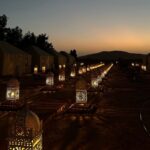
The desert is arguably Morocco’s most romantic destination. Sunset camel rides, private luxury tents, candlelit dinners and silent, star-filled nights make it a favourite with couples and honeymooners.
Yes. Many operators can arrange private dinners, decorated tents, cakes and personal touches for birthdays, anniversaries, proposals and honeymoons. Give as much notice as possible so it can be organised properly.
Coverage is usually available in and around Merzouga but weakens as you move deeper into the dunes. Some luxury camps have limited signal or Wi-Fi; remoter camps have none at all.
Yes, and it’s a choice few regret. A second night removes the rush, adds time for extra activities and nearby excursions, and lets you watch the dunes change character through the day.
Because it combines everything Morocco does well in one place: extraordinary landscapes, traditional hospitality, live music, adventure and complete stillness. Whether it’s the camel trek across the dunes, the campfire at night or the sky overhead, the Sahara is the part of the journey most travellers describe first when they get home.
A dependable first-visit route links Marrakech, Fes, the Sahara Desert, Chefchaouen and Casablanca, giving you culture, architecture, landscape and history in one journey. With extra days, add Essaouira for the coast, Rabat for its monuments or the Atlas Mountains for scenery.
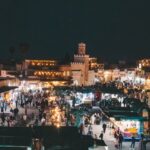
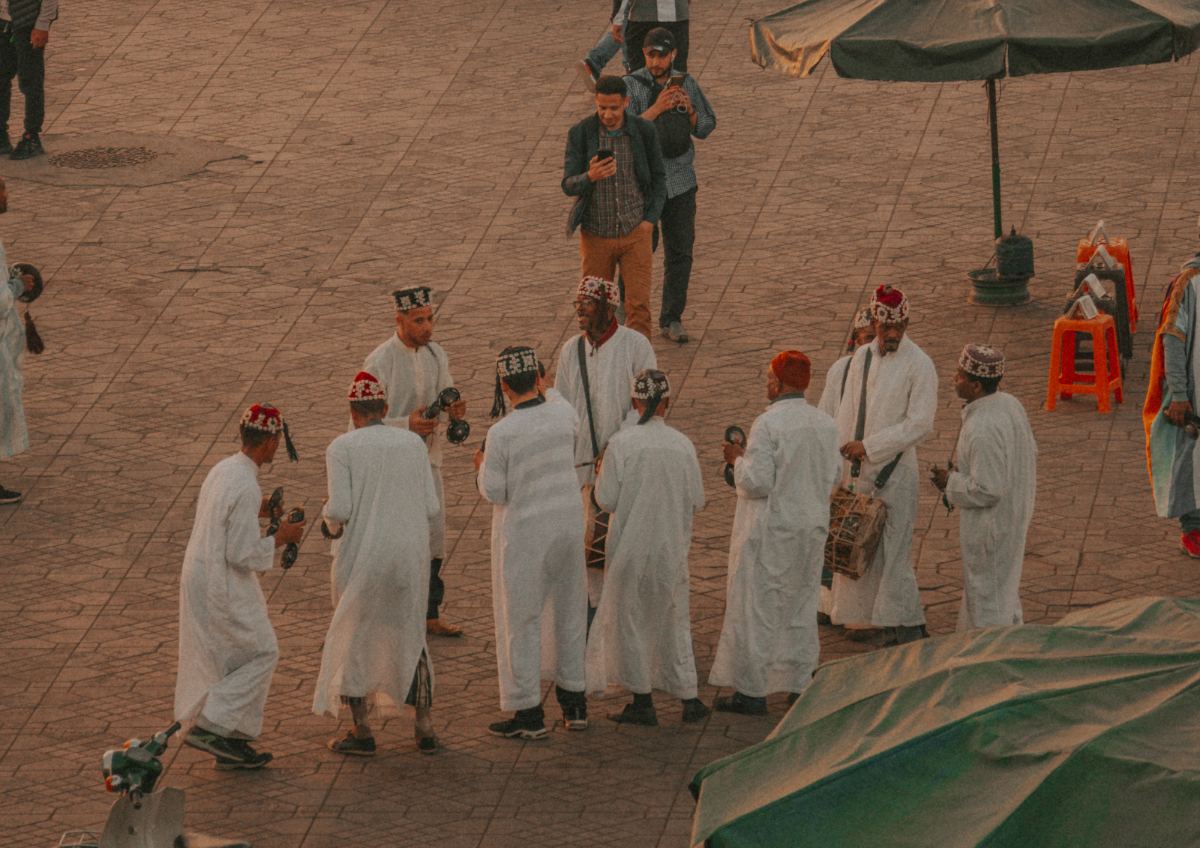
Marrakech is Morocco’s most visited city for good reason: labyrinthine souks, ornate palaces, tranquil gardens, beautiful riads and the theatre of Jemaa el-Fnaa at dusk. It’s also the best base for Atlas Mountain and Sahara excursions.
Three to four days lets you see the main sights without rushing, eat well, spend real time in the souks and still fit in a day trip to the Atlas foothills, Ouzoud or the Agafay desert.
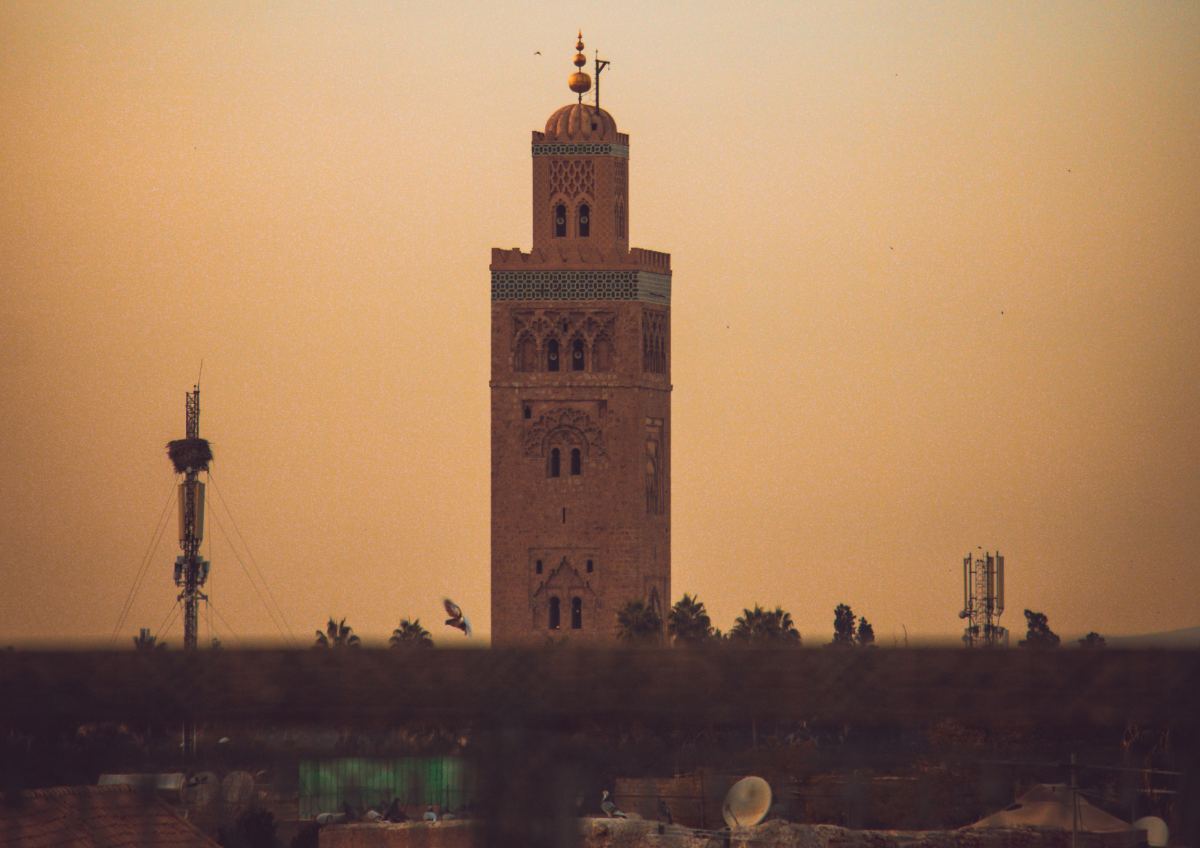
Jemaa el-Fnaa, the Bahia Palace, the Saadian Tombs, the Koutoubia Mosque, Jardin Majorelle, the Ben Youssef Madrasa, El Badi Palace and the souks of the medina.
Marrakech is generally safe and heavily visited. The main annoyances are pickpocketing in crowded areas and unofficial “guides” offering directions for a fee. Keep valuables secure, use licensed taxis, and be polite but firm with persistent approaches.
Fes is Morocco’s cultural and spiritual heart, home to one of the world’s largest and best-preserved medieval medinas. It offers living craftsmanship, ancient religious schools and an atmosphere that feels genuinely unchanged.
Two to three days is enough to explore the medina, visit the major monuments, see the tanneries and get a feel for the city’s rhythm. A local guide is well worth it on the first day.
Its UNESCO-listed medina, the centuries-old Chouara tanneries, the Al-Qarawiyyin complex, zellige tilework, pottery, brass and leather workshops, and its enduring role as a centre of learning and craft.
Chefchaouen is one of Morocco’s most photographed places. The blue-washed lanes, mountain setting, café terraces and unhurried pace make a welcome contrast to the intensity of the larger cities.
One or two nights. That’s enough to wander the blue streets, walk up to the Spanish Mosque viewpoint for sunset, browse the craft shops and enjoy the town at its quietest, early and late in the day.
Explanations range from religious symbolism introduced by Jewish residents, to keeping interiors cool, to deterring insects — and, more recently, simple visual appeal. Whatever the origin, the blue has become the town’s signature.
Casablanca is Morocco’s largest and most modern city, with striking Art Deco and Mauresque architecture, an ocean-front corniche, excellent restaurants and the extraordinary Hassan II Mosque. It suits a short stop rather than a long stay.
One or two days covers the Hassan II Mosque, the corniche, the Habous quarter and the city-centre architecture, plus time to enjoy the food scene.
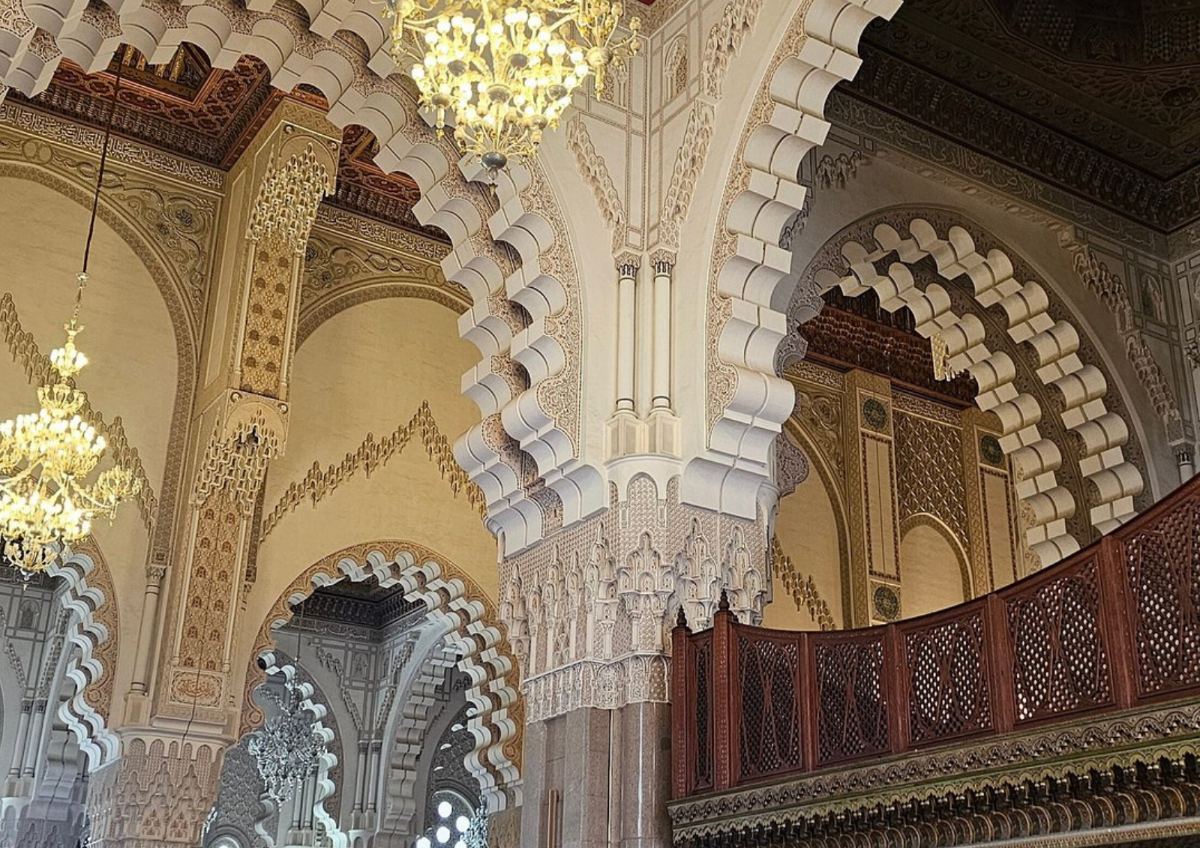
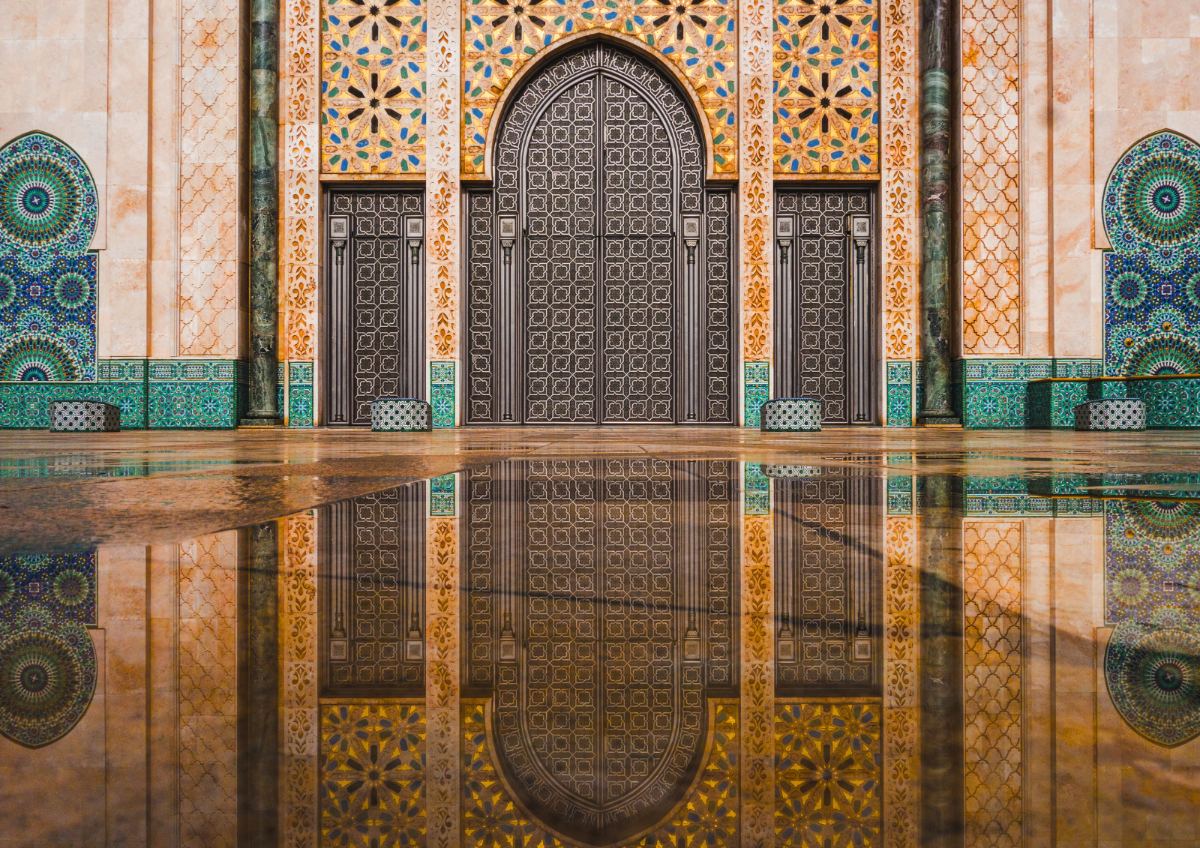
It is one of the largest mosques in the world, built partly over the Atlantic with a minaret among the tallest anywhere. It is also one of the few mosques in Morocco open to non-Muslim visitors on guided tours, showcasing exceptional Moroccan craftsmanship.
Rabat is calm, green and easy to enjoy — a capital city with major historical monuments, gardens, a compact medina and Atlantic beaches, without the crowds of Marrakech or Fes.
The Kasbah of the Udayas, the Hassan Tower, the Mausoleum of Mohammed V, the Andalusian Gardens, the Chellah necropolis and the coastal road.
Essaouira is a relaxed Atlantic port town with a walled medina, working fishing harbour, wide beach, superb seafood and a long-standing arts and music scene. It’s one of the easiest places in Morocco to slow down.
Two or three days is ideal — enough for the medina and ramparts, a seafood lunch at the port, time on the beach and a browse through the woodworking and art studios.
Cooler ocean air, a smaller and gentler medina, far less hassle and a slower pace. Where Marrakech is intense and theatrical, Essaouira is breezy and easygoing, which is why so many itineraries pair the two.
Tangier has been transformed in recent years and now blends Moroccan and European influences with a modern marina, a revitalised medina and a dramatic position overlooking the Strait of Gibraltar. Its ferry and rail links make it a natural entry or exit point.
Two days covers the medina and Kasbah, the waterfront, the Kasbah Museum, the cafés of the old town and a trip out to Cap Spartel and the Caves of Hercules.
Yes — fast ferries from Tarifa reach Tangier in about an hour, and day trips are widely sold. It’s a brief taste, though; anyone wanting a real sense of Morocco should allow several days at minimum.
Ouarzazate is the gateway between the Atlas Mountains and the desert, known for its film studios, the Taourirt Kasbah and its cinematic desert-edge setting. Most travellers pass through en route to Merzouga rather than staying long.
It is one of the finest surviving examples of southern Moroccan earthen architecture, a UNESCO World Heritage Site, and a filming location for a long list of international productions. The fortified village rising above the riverbed is instantly recognisable.
Definitely. Crossing the riverbed, climbing through the narrow lanes to the granary at the summit and looking out over the valley is a highlight of the Marrakech-to-desert route, and it takes only an hour or two.
The Atlas range is one of Morocco’s great landscapes: deep valleys, Amazigh villages, terraced fields, waterfalls and high passes. It offers a complete change of pace from the cities and some of the country’s best walking.
The High Atlas is the usual choice for first-timers, easily reached from Marrakech and home to Imlil, Toubkal National Park and the Ourika and Ounila valleys. The Middle Atlas and Anti-Atlas are quieter and equally scenic.
Imlil is the gateway to Toubkal and a rewarding destination in its own right — walnut groves, mountain views, traditional Amazigh hospitality and trails that suit everything from a gentle afternoon walk to a serious ascent.
Yes. Alongside demanding multi-day treks there are plenty of easy and moderate valley walks suitable for beginners and families. A local guide will match a route to your fitness and available time.
At 4,167m, Toubkal is North Africa’s highest peak. It requires good fitness and acclimatisation but no technical climbing in normal summer conditions. Most people summit over two days with a licensed mountain guide; winter ascents need crampons, an ice axe and experience.
Yes. The Dades combines red rock formations, palm groves, old kasbahs and the famous switchback road climbing into the gorge — one of the most scenic overnight stops between Marrakech and Merzouga.
Its dramatic red cliffs, the “monkey fingers” rock formations, lush oasis floor, mud-brick villages and the hairpin road through the gorge. It also sits along the Road of a Thousand Kasbahs.
Todra’s limestone walls rise around 300 metres above a narrow river channel, creating a spectacular natural corridor. It’s a favourite for walking, photography and rock climbing.
Yes. A level road and path follow the river through the narrowest section, so you can enjoy the full height of the cliffs on an easy stroll of thirty minutes or so.
Merzouga is the gateway to Erg Chebbi, Morocco’s most accessible field of large dunes. Camel treks, desert camps, sandboarding, 4×4 excursions and unforgettable sunsets have made it the country’s best-known desert destination.
Yes. Accommodation ranges from village guesthouses to luxury dune camps, and staying one or two nights gives you time for both the desert and the cultural sites nearby, including Khamlia and Rissani.
Rissani is an atmospheric market town with deep historical significance as the cradle of the ruling Alaouite dynasty. It’s a rewarding stop for anyone interested in everyday southern Moroccan life rather than tourist sights.
Its traditional souk — held on set days each week — trading dates, spices, produce, livestock, crafts and household goods. It’s also the home of medfouna, the stuffed flatbread often called Berber pizza.
Ouzoud is one of Morocco’s most impressive natural sights, with water dropping around 100 metres in stages into a green gorge. Walking trails, small boat rides at the base and resident Barbary macaques make for an enjoyable half-day.
Yes. Ouzoud is roughly two and a half to three hours from Marrakech each way, making it one of the city’s most popular day excursions.
Ifrane surprises most visitors — alpine-style architecture, pitched red roofs, tidy parks and a cool climate, all set among cedar forests. It’s usually a short stop on the Fes-to-desert route rather than a destination in itself.
Its European-influenced design, its cleanliness, the surrounding cedar forest with its Barbary macaques, and the nearby ski area at Michlifen, which draws Moroccan visitors in winter.
Meknes is the most underrated of the four imperial cities: monumental gates, vast granaries and stables, a walkable medina and noticeably fewer crowds. It pairs naturally with a visit to Volubilis.
Bab Mansour, El Hedim Square, the Heri es-Souani granaries and Royal Stables, the Mausoleum of Moulay Ismail, the medina souks, and Volubilis and Moulay Idriss nearby.
Volubilis holds Morocco’s most complete Roman remains, including a basilica, triumphal arch, capitol and a remarkable collection of floor mosaics still in place. Set among rolling farmland, it’s an atmospheric site.
Two to three hours is enough to walk the site properly. A guide adds a great deal of context, and early morning or late afternoon offers cooler temperatures and better light.
Agadir is Morocco’s main beach resort: a long sandy bay, modern hotels, a marina, golf courses and reliable sunshine for much of the year. It’s a place to relax rather than to sightsee, having been rebuilt after the 1960 earthquake.
Beach time and water sports, the marina and corniche, the Souk El Had market, golf, boat trips, and day excursions to Paradise Valley, Taghazout’s surf beaches and the Souss-Massa national park.
Essaouira and Agadir lead the list. Essaouira offers a historic setting and steady winds ideal for kitesurfing and windsurfing; Agadir has calmer, warmer conditions, wider beaches and full resort facilities. Taghazout is the pick for surfers.
For maximum variety, combine Marrakech, Aït Ben Haddou, the Dades Valley, Merzouga and Fes — imperial cities, mountain passes, kasbahs and the Sahara in one route. For a gentler week, stay with Marrakech, the High Atlas and Essaouira.
A riad is a traditional Moroccan house built inward around a central courtyard or garden. Plain from the street and beautiful inside, many historic riads have been restored as boutique guesthouses, and staying in one is among the best ways to experience Moroccan hospitality.
Riads offer intimacy, character and personal service in the heart of the medina; hotels offer larger facilities, pools, gyms and easier vehicle access. Many travellers do both — riads in Marrakech and Fes, hotels elsewhere.
Yes. Most have en-suite bathrooms, air conditioning or heating, and modern amenities behind traditional design. Luxury riads add rooftop terraces, plunge pools, hammams and excellent in-house dining.
Many are. Look for family suites, connecting rooms or the option to book a small riad exclusively. Bear in mind that riads often have steep stairs and open courtyards, which is worth considering with very young children.
Most modern riads offer air conditioning for summer and heating for winter evenings, which matters more than visitors expect — Moroccan buildings can be genuinely cold in January. Confirm when booking.
Usually yes, and it’s often a highlight: fresh bread, msemen and beghrir pancakes, local honey and olive oil, eggs, yoghurt, fruit, pastries, juice and mint tea, typically served on the terrace or in the courtyard.
For a special trip, yes. Luxury riads combine spacious, beautifully restored rooms with rooftop terraces, spa facilities, fine dining and highly personal service — often at prices well below equivalent hotels in Europe.
A riad is an urban courtyard house; a kasbah is a fortified structure or walled village, typically found in the south and along the Atlas valleys. Many restored kasbahs now operate as distinctive hotels.
Everything from hostels and family guesthouses to riads, boutique hotels, international resorts, mountain lodges, eco-lodges, beach hotels and desert camps. Every budget and travel style is well served.
Yes. Marrakech in particular has a deep luxury market, with more in Casablanca, Rabat, Agadir and along the coast. Many offer world-class spas, golf, fine dining and traditional hammams.
They range from simple traditional tents with shared facilities to luxury camps with proper beds, en-suite bathrooms, hot showers, electricity and restaurant-quality dining. You can choose the level of comfort that suits you.
Most do, with a toilet, washbasin and hot shower inside each tent. Standard camps generally use shared bathroom blocks.
Yes. Private tents are standard at most camps and are normally included in private tours. Couples and families almost always prefer them.
Complimentary Wi-Fi is near-universal in hotels and riads. Speeds are strongest in the cities and weaker in mountain and desert areas, where connections can be intermittent.
Very. Pools are standard in resorts and mid-to-upper range hotels, and many riads have a small courtyard plunge pool. They are a real asset in Marrakech’s summer heat.
Broadly yes. Family rooms, extra beds, children’s menus and flexible arrangements are widely available, and staff are typically very welcoming to children. Private tours let you match accommodation to your family’s needs.
Most can prepare vegetarian, vegan, gluten-free and allergy-conscious meals when told in advance. Give notice at the time of booking and remind staff on arrival, particularly for serious allergies.
Yes. Trains, long-distance coaches, shared taxis and domestic flights connect the country well, and services between major cities are frequent and punctual enough for independent travel.
The ONCF network is modern, comfortable and good value, linking Tangier, Kenitra, Rabat, Casablanca, Meknes, Fes and Marrakech. First class offers reserved, air-conditioned seating for a modest premium.
Tangier, Kenitra, Rabat, Casablanca, Meknes, Fes, El Jadida and Marrakech are all on the network. Merzouga, Ouarzazate, Chefchaouen, Essaouira and the Dades Valley are reachable only by road.
Trains are excellent for city-to-city travel in the north and centre. A guided tour is the better option for the Sahara, the Atlas Mountains and the kasbah routes, which the railway doesn’t serve.
The major coach operators run modern, air-conditioned vehicles with reserved seating and luggage storage on an extensive national network. They are inexpensive and reach far more places than the trains.
It’s a good choice if you want full independence and are comfortable with assertive city traffic and winding mountain roads. Many visitors find a private driver more relaxing for the same cost or a little more.
For multi-region itineraries, a private driver is often the best value decision of the trip. You avoid navigation, parking and long hours behind the wheel, and gain someone who knows where to stop and when to leave.
Motorways and main national roads are well maintained and clearly signposted. Mountain and rural roads are narrower and more winding but generally in reasonable condition, weather permitting.
Yes, connecting Casablanca, Marrakech, Agadir, Tangier, Ouarzazate, Errachidia, Dakhla and Laayoune among others. Flying saves time on long routes, though most travellers prefer driving for the scenery in between.
Flying suits long north–south hops and short trips. Driving is better for everything else, since so much of Morocco’s appeal — mountain passes, gorges, oasis valleys, kasbahs — lies between the airports.
Private tours usually include arrival and departure transfers; group tours often don’t. Either way, operators can arrange transfers on request, so confirm this before you fly.
Yes, at every international airport in Morocco. A pre-booked transfer with a driver meeting you in arrivals is well worth it after a long flight or a late-night landing.
Yes, official taxis wait outside every arrivals hall. Use only licensed vehicles from the official rank and agree the fare before departing, or ensure the meter is running.
Availability varies by city and has changed over time due to local regulation. Licensed taxis remain the standard option in most destinations, and your hotel or riad can always arrange reliable transport.
Options include a direct train of roughly seven hours, coaches, a short domestic flight, or a private car. Many travellers choose a multi-day tour that connects the two cities via the Atlas Mountains and the Sahara.
Around eight to ten hours of driving without lengthy stops. Almost all itineraries split it over two days to include Aït Ben Haddou, Ouarzazate, the Dades Valley and Todra Gorge.
Roughly seven to eight hours. The route commonly includes Ifrane, the cedar forest at Azrou, Midelt and the Ziz Valley, and can be done in one long day or spread over two.
Yes, but it’s a long haul of eleven hours or more. Most travellers break the journey in Marrakech or Fes, or begin their desert tour from one of those cities instead.
Fuel stations are common on motorways and in towns. They thin out considerably in the desert and remote mountain areas, so top up whenever you can before long empty stretches.
Almost always. Occasional winter snow in the High Atlas or flash flooding in the south can close passes temporarily, so check conditions locally before setting out in bad weather.
It can be. Snow, ice and poor visibility affect the higher passes such as Tizi n’Tichka between December and March. Allow extra time, check conditions before departure, and consider an experienced local driver if you’re not used to mountain roads.
Parking is generally available near hotels and attractions, often supervised by an attendant who expects a small tip. Space is tighter in city centres and unavailable inside the medinas.
No. Historic medinas are largely pedestrian, with lanes too narrow for cars. You park at a designated area outside and continue on foot, sometimes with a handcart for luggage.
Riads routinely send staff to meet guests at the nearest vehicle access point and carry or cart luggage the rest of the way. Arrange this in advance — it makes arrival far easier.
Many private tours can be adapted with accessible hotels, shorter walking routes, vehicle drop-offs closer to sites and a slower daily schedule. Discuss your specific needs early so the itinerary can be built around them.
Modern hotels, museums and newer attractions are increasingly accessible, and specialist operators run adapted tours. Historic medinas remain challenging due to uneven surfaces, steps and narrow lanes, so itineraries need careful planning.
Yes. A private tour is the easiest approach, giving control over meal times, rest breaks and the length of each day. Moroccan hospitality towards children is warm and genuine.
Certainly. Bring a carrier rather than relying on a pushchair, since medina surfaces are uneven, and pack any specific formula or supplies you depend on. Most hotels can provide a cot with advance notice.
For multi-destination trips, yes. A private vehicle allows door-to-door travel, spontaneous photo stops, luggage security and a schedule built around you rather than a timetable.
Book airport transfers, private drivers and any domestic flights in advance, and reserve train seats in high season. Local taxis and coaches can be arranged on the day without difficulty.
The classic route runs Marrakech → Tizi n’Tichka pass → Aït Ben Haddou → Ouarzazate → Dades Valley → Todra Gorge → Merzouga → Ziz Valley → Fes. It crosses mountains, gorges, oases and dunes in a single continuous journey.
A private guided tour. Transport, accommodation, routing and local knowledge are handled for you, which matters most on a trip involving long drives and destinations with limited public transport.
It depends on your route. Trains are ideal if you’re staying in the northern cities; a private driver or guided tour is the better choice for anyone including the Sahara, the Atlas Mountains or the kasbah trail — which is most first-time visitors.
Moroccan cuisine draws on Amazigh, Arab, Andalusian, Mediterranean and West African traditions. The staples are tagine, couscous, pastilla, harira soup, grilled brochettes, coastal seafood and a long list of pastries — built on olive oil, preserved lemon, olives, seasonal vegetables and a distinctive spice palette.
A tagine is both the conical clay pot and the slow-cooked dish made in it. Chicken with preserved lemon and olives, lamb with prunes and almonds, and vegetable tagines are the classics — the shape traps steam so everything cooks slowly in its own juices.
Steamed semolina grains served with a vegetable broth and usually lamb, beef or chicken, though vegetarian versions are common. Traditionally it’s the Friday meal, shared from a single large dish after midday prayers.
Mint tea above all — green tea with fresh mint and sugar, poured from height and offered as a gesture of welcome. Fresh orange juice, avocado smoothies, coffee (often nous-nous) and herbal infusions are also widely enjoyed.
Aromatic rather than hot. Cumin, ginger, cinnamon, turmeric, paprika, saffron and coriander do the work, and chilli is usually served on the side as harissa for those who want heat.
Yes. Vegetable tagines, couscous, lentil and bean dishes, salads, grilled vegetables, olives, bread and fruit are everywhere. Say clearly that you eat no meat at all, since some kitchens use meat stock by default.
Increasingly so, particularly in Marrakech, Essaouira and other tourist centres where dedicated vegan restaurants now exist. Elsewhere, many traditional dishes can be made without meat, butter or eggs if you ask in advance.
Manageable with care. Grilled meats, salads, tagines, vegetables and rice are naturally gluten-free, but bread and couscous are dietary cornerstones and cross-contamination is a real risk. Travellers with coeliac disease should explain their needs clearly and consider a card written in Arabic or French.
Very. Most dishes are mild, and grilled chicken, bread, rice, pasta, omelettes, chips, fresh fruit and yoghurt are available almost everywhere. Fussy eaters rarely struggle.
Generally yes, if you choose busy stalls with fast turnover and food cooked fresh in front of you. Avoid anything sitting lukewarm, and follow the crowds — locals know which vendors to trust.
Tap water is treated in cities, but most visitors drink bottled or filtered water to avoid an upset stomach. Bottled water is cheap and everywhere; a filter bottle reduces plastic waste.
Yes, in licensed hotels, restaurants, bars and dedicated shops, mainly in cities and tourist areas. Morocco also produces its own wine and beer. Availability is limited in smaller towns and rural regions.
Yes, in licensed venues and private accommodation. Drinking in public streets is not acceptable, and discretion during Ramadan is particularly appreciated.
Comfortable, modest clothing works best: lightweight layers in summer, warmer ones in winter and for desert nights. Covering shoulders and knees is respectful in medinas, rural areas and at religious sites, and closed-toe shoes are worth having for uneven streets.
No. Headscarves are not required of visitors anywhere except when entering an active mosque. Many women carry a light scarf anyway — useful for sun, dust and conservative areas.
Shorts are fine at beaches, pools and resorts, and common among tourists in cities. In traditional neighbourhoods, rural villages and at religious sites, longer shorts or light trousers attract less attention and show more respect.
Morocco balances traditional values with a modern outlook, and attitudes vary widely between Casablanca, a coastal resort and a mountain village. Dressing thoughtfully and following local cues will make you comfortable everywhere.
Loose, breathable long-sleeved clothing during the day for sun protection, plus a warm jacket or fleece for the evening — desert nights are cold from autumn to spring. Add closed shoes, sunglasses, sunscreen and a scarf for sun and blowing sand.
Foreign visitors share rooms without difficulty at hotels, riads and tourist accommodation. Different rules can apply to Moroccan nationals, so if you’re travelling with a Moroccan partner, check with the property first.
Holding hands is generally fine, especially in cities and tourist areas. More overt displays of affection are uncommon in public and are best avoided out of respect for local norms.
Salam alaikum with a smile goes a long way. Handshakes are standard, though some people — particularly between men and women — prefer a hand on the heart instead. Follow the other person’s lead and you won’t go wrong.
Yes, in souks and craft markets it’s part of the exchange, and it should stay good-humoured. Take your time, be willing to walk away, and only start negotiating if you’re genuinely interested. Fixed-price shops and restaurants are not negotiable.
Tipping is customary and appreciated for waiters, porters, guides, drivers and parking attendants. Small amounts are normal for everyday service; larger tips are reserved for guides and drivers who have looked after you well over several days.
Always ask first. Many people are happy to agree, some will decline, and some vendors or performers will expect a small payment. Asking turns a photo into an interaction rather than an intrusion.
A few simple things carry you far: dress modestly where appropriate, greet people before asking questions, use your right hand for eating and passing items, accept mint tea when it’s offered, remove your shoes if asked when entering a home, ask before photographing people, and be considerate during Ramadan by not eating or drinking openly in public during daylight hours. Curiosity and courtesy are almost always repaid with genuine hospitality.